
7 Best Excavator Hydraulic System Troubleshooting Tips
Operating a heavy hydraulic excavator requires peak performance from every component. When a machine starts lagging, experiencing slow bucket movements, or showing noticeable boom shaking after a few hours of operation, it signals an underlying issue that demands immediate technical attention. Mastering Excavator Hydraulic System Troubleshooting is essential for field mechanics and equipment owners to prevent excessive fuel consumption, increased component wear, and costly job-site downtime.
This comprehensive diagnostic guide explores common hydraulic system failures, structured repair sequences, and how professional service manuals play a critical role in keeping your machinery operating at maximum efficiency.
Understanding Excavator Hydraulic Performance
Modern heavy excavators rely on complex, high-pressure closed-loop or open-loop hydraulic systems powered by variable displacement piston pumps. Hydraulic fluid transmits tremendous power to lift, swing, and dig. However, because hydraulic systems operate under extreme pressure and heat, performance drops are often symptomatic of specific failures within the circuit.
When operators notice that a machine responds sluggishly only after working for a few hours, it frequently points toward thermal breakdown, fluid viscosity loss, or internal component wear that becomes pronounced as the hydraulic oil reaches its maximum operating temperature. For heavy tracked units like the Caterpillar 340 Excavator Service Repair Manual (Prefix LXA), maintaining precise hydraulic pressures is vital for peak breakout force and smooth multi-function operations.
Step-by-Step Excavator Hydraulic System Troubleshooting
When tackling hydraulic lag, slow cycle times, or erratic boom behavior, professional technicians follow a systematic diagnostic approach rather than guessing at replacement parts. Proper Excavator Hydraulic System Troubleshooting relies on targeted steps:
1. Verify Fluid and Filter Conditions
While standard checks often confirm that hydraulic oil levels look normal and filters were recently replaced, verifying fluid specifications is essential. Using incorrect oil viscosity grades will cause the fluid to thin out excessively under operating temperatures, leading to internal pump bypass and loss of actuator speed. Furthermore, check for signs of aeration or foaming in the hydraulic reservoir, which indicates air suction in the intake lines. For additional background on fluid cleanliness and contamination control, you can reference guidelines provided by Machinery Lubrication.
2. Evaluate Pump Health and Flow Rates
A worn-out hydraulic pump is one of the primary culprits behind systemic lagging across all functions (bucket, arm, and boom). As internal swashplates, pistons, or valve plates wear down, internal leakage increases.
- Diagnostic Test: Perform flow meter and pressure tests on the main hydraulic pumps while under load. Compare your findings directly against the manufacturer’s technical specifications listed in a dedicated workshop repair manual.
3. Inspect Control Valves and Relief Pressures
If only specific functions are lagging or shaking while others operate normally, the issue often isolates to the main control valve spool or individual port relief valves. Debris, scored spool valves, or weak relief springs can prevent spools from shifting completely or maintaining proper circuit pressure, leading to delayed response times and erratic shaking.
4. Check for Air Ingress in Suction Lines
If air enters the hydraulic suction lines before the pump, it causes cavitation. Cavitation damages pump components rapidly and creates a distinct whining noise accompanied by jerky cylinder movements and boom vibration. Inspect all suction hoses, clamps, and O-rings for microscopic cracks or loose fittings that allow air to draw into the system under vacuum.
Preventing Job-Site Downtime with Accurate Technical Documentation
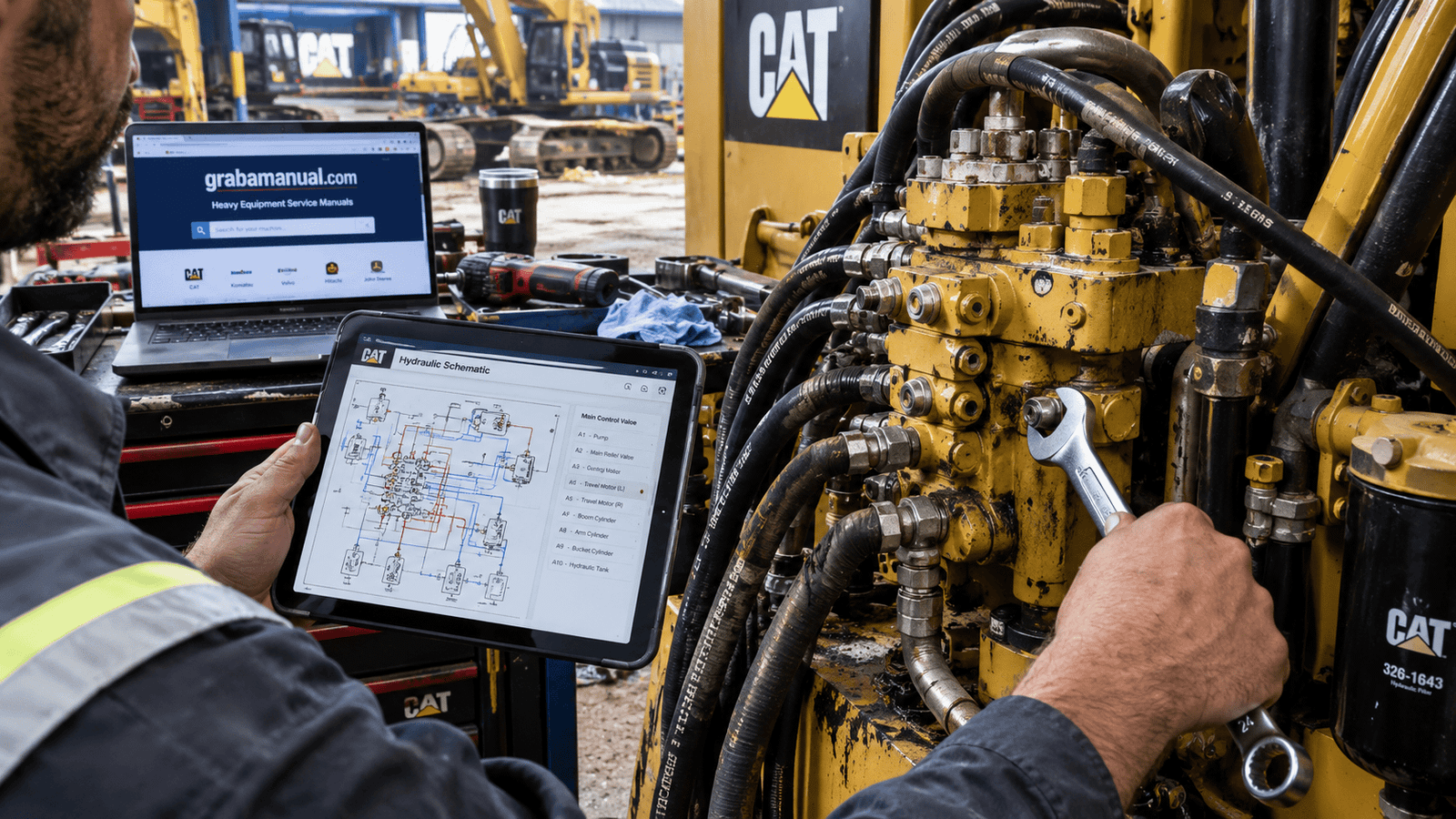
Guesswork on a multi-million-dollar job site is expensive. Relying on accurate schematics, electrical diagrams, and hydraulic schematic layouts allows field mechanics to pinpoint faults correctly on the first try. Having immediate access to comprehensive service and workshop documentation ensures that technicians know the exact torque specifications, valve settings, and pressure thresholds required for specific machine serial numbers.
Whether you are rebuilding a main control valve, replacing a hydraulic pump, or tracing electrical pilot lines, having the right technical guide eliminates trial and error.
Conclusion
Maintaining a high-performing hydraulic system requires proactive monitoring, strict adherence to fluid maintenance schedules, and precise diagnostic testing. By applying reliable Excavator Hydraulic System Troubleshooting techniques—from checking pump pressures to inspecting control valves—you can resolve hydraulic lag and boom shaking before they result in catastrophic component failure.
For complete service procedures, hydraulic schematics, and repair guides for major heavy machinery brands, explore the digital documentation available at grabamanual.com.